.png)
Signs of Clogged Arteries

Your Body Is Trying to Warn You: The Unexpected Signs of Clogged Arteries Most People Miss Until It's Too Late
By Cami Grasher | My Root Cause Coach
Coronary artery disease is the leading cause of death in the United States. Not cancer. Not diabetes. Not car accidents. Heart disease. It accounts for roughly one in four deaths every year, which works out to approximately 610,000 Americans, and the most sobering part of that statistic is this: nearly 80% of those deaths are preventable with lifestyle changes.
Let that land for a moment.
Eight out of ten people who die from heart disease did not have to.
The reason so many people miss the window to prevent it comes down to two things. First, clogged arteries develop slowly and quietly over months to years, often without obvious symptoms until a significant blockage has already formed. Second, when symptoms do appear, they frequently don't look like what most people picture when they imagine heart disease. They don't always show up as dramatic chest pain or shortness of breath. They show up as a tight jaw. A cramping calf. Lower back pain. Fatigue. And because those symptoms have dozens of other explanations, the connection to arterial health rarely gets made until it's already a crisis.
This article is about changing that. Because early detection, when it happens, creates a genuine window to reverse course. And the root cause approach to heart health gives you tools that go far beyond what a prescription can offer.
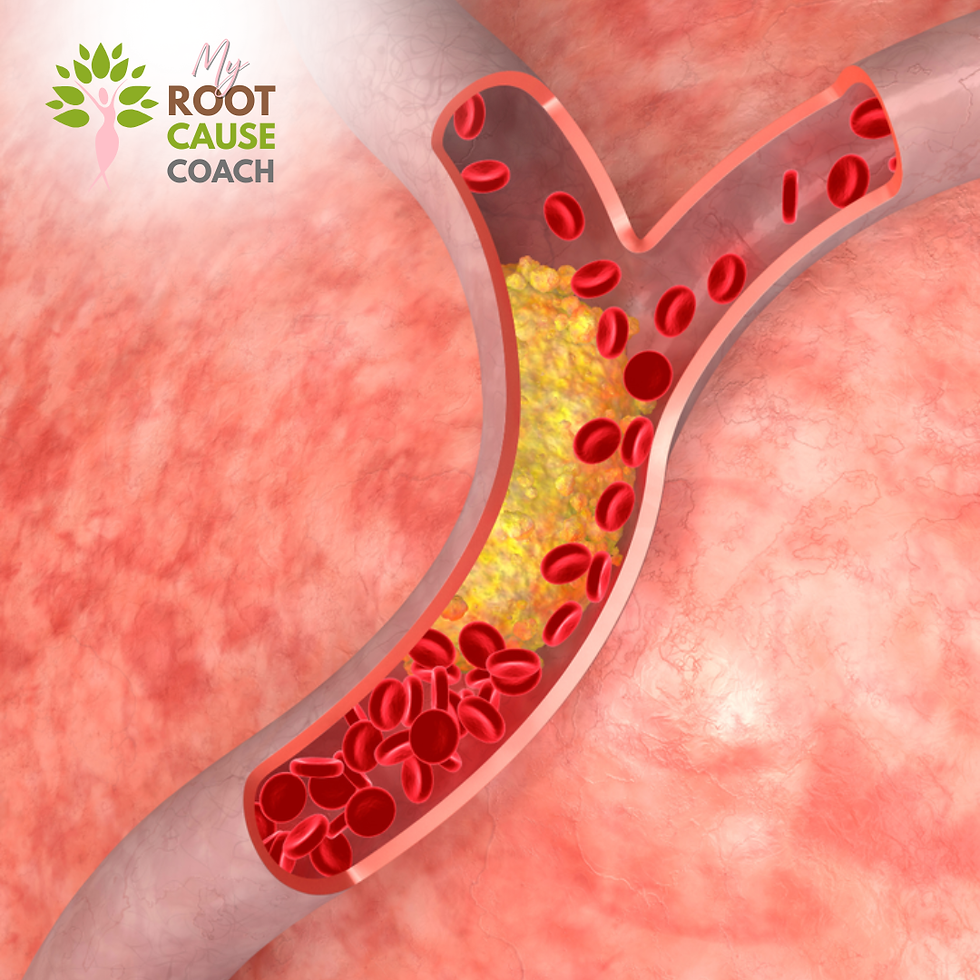
What Is Actually Happening in Your Arteries
Clogged arteries, clinically called atherosclerotic cardiovascular disease or ASCVD, begin with the buildup of plaque inside the walls of your blood vessels. This plaque is made up primarily of cholesterol, fat, calcium, and inflammatory byproducts that accumulate over time. As plaque builds, it narrows the artery, reducing blood flow and oxygen delivery to the tissues and organs that artery supplies.
The conventional list of risk factors includes high cholesterol, high blood pressure, high blood sugar, smoking, physical inactivity, and a diet high in saturated fat. Genetics also plays a role, meaning some people are working against a higher baseline risk regardless of their habits. But genetics is not destiny, and that 80% preventability figure makes clear that lifestyle is doing most of the driving.
What the conventional explanation often leaves out is the role of inflammation. Inflammation is not just a downstream effect of arterial disease. It is one of its primary drivers. Smoking triggers vascular inflammation. Chronically elevated blood sugar triggers it. Autoimmune conditions trigger it. And a gut microbiome that is out of balance, something that rarely makes the cardiology conversation, can sustain low-grade systemic inflammation that keeps plaque formation ticking along silently in the background for years.
This is the root cause lens worth applying here: heart disease is not primarily a cholesterol problem. It is an inflammation problem in which cholesterol becomes the vehicle for damage when the arterial wall is already inflamed, porous, and vulnerable. Treating the cholesterol number without addressing the inflammation is a little like mopping the floor without turning off the leaking faucet.
The Unexpected Warning Signs
Here is where this conversation gets genuinely important, because the body gives warnings long before a heart attack. Most people just don't know what they're looking for.
Erectile dysfunction in men is one of the most overlooked early indicators of arterial disease. The arteries supplying the pelvis are smaller than the coronary arteries, which means they tend to show the effects of plaque buildup earlier. On average, there is a three to five year gap between the onset of erectile dysfunction and the diagnosis of coronary heart disease. That is a substantial window of time to intervene, and it is almost never discussed in this context. If a man is reaching for a blue pill, the more important question is why the blood flow is compromised in the first place.
Calf pain during walking is another sign that goes unrecognized. When a leg artery is partially blocked, the muscles during exertion demand more oxygen than the narrowed vessel can supply, producing a cramping or heavy aching sensation that typically eases with rest. This is called claudication, and it is a direct signal of peripheral artery disease, which is the same atherosclerotic process occurring in the leg rather than the heart. One leg usually feels worse than the other. If you also notice foot pain that worsens when lying flat and improves when you dangle your legs off the bed, that is a sign of more significant blockage and warrants immediate evaluation.
A tight jaw or jaw ache, particularly in women, is a symptom of angina, which is the discomfort produced when blood flow to the heart is reduced. The vagus nerve, the main pain-signaling pathway from the heart, runs in close contact with the neck, jaw, head, and left arm. This is why heart-related pain so often shows up in places that seem to have nothing to do with the chest. Women in particular are more likely to experience these atypical presentations and more likely to have their symptoms attributed to something benign, which is one of the reasons women's heart disease is so consistently underdiagnosed.
Lower back pain deserves more attention in this conversation than it typically gets. The lumbar arteries, which supply the lower spine and its surrounding structures, are among the earliest sites of plaque accumulation in the body. When blood flow to the spinal discs is reduced, those discs weaken and become inflamed. This can cause lower back pain directly, and it also raises the risk of herniated discs and soft tissue injury. If your lower back pain has been persistent and unexplained, and you carry other cardiovascular risk factors, arterial health is worth adding to the differential.
Fatigue, dizziness, cold sweats, vision changes, trouble with thinking and memory, and upper abdominal discomfort are all less commonly associated with heart disease but are recognized symptoms of atherosclerosis as it progresses. The location of symptoms depends heavily on where in the body the arterial narrowing is most significant, whether that is the coronary arteries feeding the heart muscle, the carotid arteries feeding the brain, or the mesenteric arteries feeding the gut.
The Root Cause Conversation Your Doctor May Not Be Having
Standard cardiovascular risk management focuses on five things: cholesterol, blood pressure, blood sugar, smoking cessation, and weight. These are legitimate targets and addressing them matters. But they are downstream markers of processes that begin much further upstream, and treating the markers without addressing the upstream environment is why so many people take their medications faithfully and still have heart attacks.
The upstream drivers worth understanding include:
Chronic inflammation is the central mechanism through which every major cardiovascular risk factor does its damage. Inflammatory markers like C-reactive protein and homocysteine are not routinely tested in standard panels, but they are among the most useful indicators of vascular risk. An anti-inflammatory dietary pattern, one that emphasizes whole foods, adequate omega-3 fatty acids, colorful vegetables, and minimal processed seed oils and refined carbohydrates, addresses this at the root level in a way that a statin alone does not.
Gut health has a more direct connection to cardiovascular disease than most people realize. The gut microbiome produces a compound called TMAO (trimethylamine N-oxide) from certain dietary inputs, particularly processed red meat and certain additives, and elevated TMAO has been associated with increased cardiovascular risk. A dysbiotic gut also sustains systemic inflammation through increased intestinal permeability, meaning the very leaky gut conversation that gets dismissed in conventional medicine is directly relevant to arterial health.
Magnesium deficiency is one of the most common and most overlooked contributors to cardiovascular risk. Magnesium plays a role in regulating blood pressure, maintaining normal heart rhythm, reducing arterial stiffness, and moderating the inflammatory response. Most Americans are deficient. It is not routinely tested. And it is rarely discussed in the context of heart disease prevention despite a substantial body of research linking low magnesium levels to increased cardiovascular events.
Sleep is not optional for cardiovascular health. Chronic poor sleep elevates cortisol, raises blood pressure, promotes insulin resistance, and drives systemic inflammation. It is, in practical terms, a cardiovascular risk factor in its own right, and it rarely appears on the standard prevention checklist despite the fact that it should.
Chronic stress does to the cardiovascular system over time what acute physical danger does in the short term, but without the resolution. Elevated cortisol promotes inflammation, raises blood pressure, disrupts blood sugar regulation, and contributes to the very plaque-forming environment we are trying to prevent. Stress management is not a soft add-on to heart health. It is structural.
When to Get Evaluated and What to Ask For
If you are experiencing new chest discomfort, shortness of breath during exertion that is out of proportion to the effort, consistent leg cramping when walking uphill or climbing stairs, or any symptom that seems to be triggered by physical activity, see your doctor promptly. If you are experiencing severe chest discomfort or shortness of breath that does not resolve at rest, jaw or left shoulder pain accompanied by nausea and sweating, or new intense pain or coolness in a foot or leg, call 911. These are emergencies.
For those who don't have active symptoms but carry risk factors, a proactive conversation with your physician might include asking about a coronary artery calcium (CAC) score, which is a low-dose CT scan that detects calcified plaque in the coronary arteries and provides a concrete measure of your actual arterial burden rather than just your risk factors. It is one of the most useful tools in preventive cardiology and is not yet offered routinely enough.
Ask also about testing beyond the standard lipid panel: apolipoprotein B (ApoB), Lipoprotein(a), C-reactive protein, homocysteine, fasting insulin, and magnesium levels all provide a more complete picture of cardiovascular risk than total cholesterol alone.
The Bottom Line
Clogged arteries do not develop overnight, and they do not announce themselves with a dramatic warning shot in most cases. They build slowly, silently, and with a trail of subtle signals that are easy to dismiss, attribute to aging, or treat in isolation without ever connecting them to what is actually happening upstream.
The good news is that the timeline of atherosclerosis gives you something precious: time.
Time to change the internal environment that is allowing plaque to form. Time to reduce inflammation, support your gut, replete your magnesium, address your sleep, and give your body the inputs it needs to protect and repair your vascular system.
Almost 80% of heart disease is preventable. That is not a statistic about other people. That is a number that applies to you, your family, and everyone you love. And it means that the most powerful thing standing between most people and the leading cause of death in this country is not a better medication. It is better information, acted on early enough to matter.
That is exactly what root cause health is for. Cami Grasher is a Root Cause Holistic Health Coach and Certified Traditional Naturopath works with clients to identify and address the underlying hormonal, neurological, inflammatory, and metabolic drivers of chronic conditions.
Call or text Cami Grasher, Root Cause Health Coach, at (214) 558-0996 for a discovery call. You can also book online by clicking the button below to choose a day and time that works best for you.
*This article is for educational purposes only and does not constitute medical advice. Never stop or reduce a prescription medication without working directly with your prescribing physician.


Comments